

Best Time to Visit Serengeti National Park for the Great Migration
The Serengeti National Park is one of the most extraordinary wildlife destinations on Earth, and its defining spectacle the Great Migration draws travelers from every corner of the world. Understanding the best time to visit the Serengeti for the migration is essential for anyone planning a safari, because the experience changes dramatically depending on the season and location within the vast ecosystem. The migration is not a single event but a continuous, circular movement of over a million wildebeest, accompanied by hundreds of thousands of zebras and gazelles, all following rainfall patterns and fresh grazing across Tanzania’s northern plains and into Kenya’s Maasai Mara. This rhythm of movement transforms the Serengeti into a living stage where nature’s most powerful instincts play out with raw intensity and beauty.
Most safari journeys to the Serengeti begin in Arusha, the gateway city to northern Tanzania’s national parks. From here, travelers connect easily to Tarangire National Park, Lake Manyara National Park, Ngorongoro Conservation Area, and ultimately the Serengeti itself. Each of these destinations plays a role in shaping the overall safari experience, but it is the Serengeti that holds the heart of the migration. Tarangire offers elephants and baobab-dotted landscapes, Ngorongoro provides a concentrated wildlife experience within a volcanic crater, and Manyara introduces lush forests and lake scenery. However, the Serengeti stands apart due to its scale, its endless horizons, and the constant movement of wildlife across its plains. Understanding how the migration flows through this ecosystem is key to choosing the right time to visit.
The Serengeti is divided into distinct regions, and each season reveals a different chapter of the migration story. These regions include the southern plains near Ndutu, the central Seronera valley, the western corridor along the Grumeti River, and the northern Serengeti extending toward the Mara River. The timing of your visit determines not only what wildlife you will see but also the kind of safari experience you will have, from dramatic river crossings to peaceful calving scenes or predator-rich plains. This seasonal movement makes the Serengeti a destination that can be visited year-round, yet each period offers a completely different perspective on the migration’s journey.
The Migration Calendar: From Calving Season to River Crossings
The best time to witness the Great Migration in the Serengeti depends largely on what aspect of the movement you want to experience. The migration is cyclical, and each stage offers its own atmosphere, intensity, and photographic opportunities. One of the most emotionally powerful periods is the calving season, which takes place between January and March in the southern Serengeti and Ndutu region. During this time, the plains are lush and green after the short rains, providing ideal grazing conditions for wildebeest and zebras. Hundreds of thousands of calves are born within a short window, creating one of the most dramatic wildlife events in the natural world.
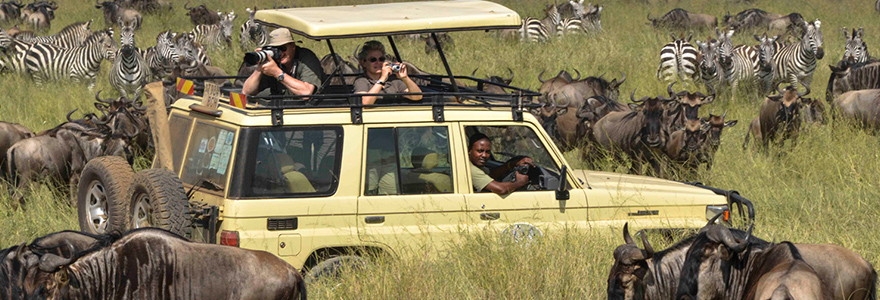
The calving season is not only about new life but also about survival. Predators such as lions, cheetahs, and hyenas are highly active during this period, taking advantage of the abundance of vulnerable young animals. This creates intense predator-prey interactions that are both dramatic and deeply moving to witness. For travelers, this is one of the most rewarding times to visit the Serengeti, as the landscape is vibrant, wildlife density is extremely high, and the emotional energy of the ecosystem is at its peak. The southern plains during this season are easily accessible from the Ngorongoro Conservation Area, making it a natural extension for travelers who begin their safari in Arusha.
As the dry season approaches in April and May, the herds begin to move northward through the central Serengeti. This transitional period is often less crowded, with fewer tourists and lush green landscapes resulting from the long rains. While wildlife is more dispersed during this time, the central Serengeti around Seronera remains active year-round due to its permanent water sources. Lions, leopards, and resident herbivores are commonly seen, and the scenery is particularly beautiful with dramatic skies and rich vegetation. For travelers seeking a quieter and more reflective safari experience, this period offers a different kind of magic, where the focus shifts from large herds to individual encounters and predator behavior.
By June and July, the migration moves into the western Serengeti, where the famous Grumeti River crossings begin. This stage marks the first major obstacle in the wildebeest’s journey toward the northern plains. The Grumeti River is home to large Nile crocodiles, and crossings here can be both unpredictable and dramatic. While not as famous as the Mara River crossings later in the year, the Grumeti region offers a more exclusive and less crowded safari experience. Luxury and mid-range camps in this area provide excellent access to migration movements, allowing travelers to witness high drama without the heavy tourist presence found in peak-season locations.
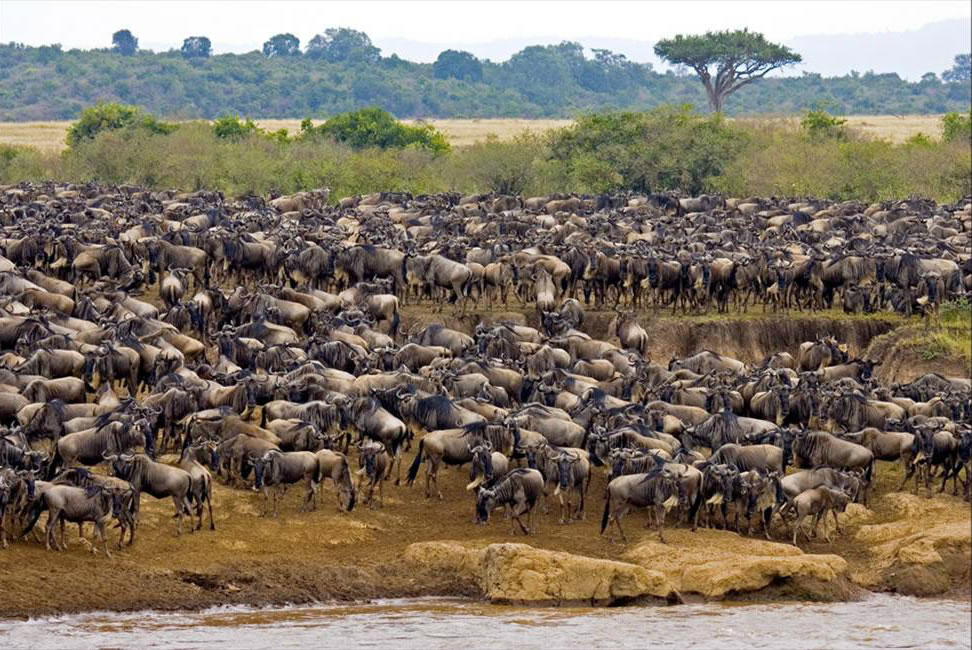
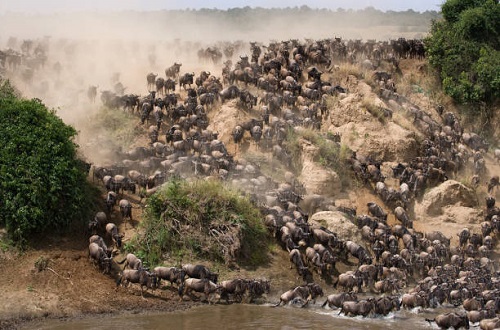
From July through September, the migration reaches its most iconic stage in the northern Serengeti and the Maasai Mara border region. This is widely considered the best time to visit the Serengeti for those hoping to witness river crossings at the Mara River. The herds gather on the banks, often hesitating for hours or even days before making the dangerous crossing. When they finally move, chaos unfolds as wildebeest plunge into fast-moving waters filled with crocodiles, while predators wait on the opposite bank. It is one of the most dramatic natural events on the planet, and witnessing it firsthand is often described as a once-in-a-lifetime experience.
The northern Serengeti during this period is remote, wild, and less crowded than the central plains, offering a more exclusive safari atmosphere. Camps are strategically positioned near crossing points, allowing guests to maximize their chances of witnessing this extraordinary spectacle. The landscape here is more varied, with rolling hills, riverine forests, and open plains creating a different aesthetic from the classic Serengeti image. For many travelers, this is the peak of the migration experience, where nature’s raw power is fully on display.
As October approaches, the herds begin to move southward again, passing through the central Serengeti before eventually returning to the southern plains by November and December. This return journey is less dramatic in terms of river crossings but still rich in wildlife activity. The short rains begin to transform the landscape once again, turning the plains green and preparing the ecosystem for another calving season. Predator activity remains strong, and the cycle of life continues in its endless rhythm. This period is also excellent for travelers seeking fewer crowds and more affordable safari options, as it falls within the shoulder season.
Crafting the Perfect Serengeti Migration Safari Experience
While the Serengeti is the centerpiece of the migration, a complete safari experience in northern Tanzania is enhanced by combining it with surrounding national parks. Starting in Arusha allows travelers to acclimatize and explore nearby attractions before heading deeper into the wilderness. Arusha National Park offers walking safaris and scenic landscapes, providing a gentle introduction to Tanzania’s natural beauty. From there, Tarangire National Park adds a different dimension with its large elephant herds and iconic baobab trees, especially impressive during the dry season when wildlife concentrates around water sources.
Ngorongoro Conservation Area is another essential component of a migration-focused itinerary. Its crater floor hosts one of the highest densities of wildlife in Africa, offering reliable sightings of lions, elephants, buffalo, and rhinos throughout the year. Many travelers choose to stop at Ngorongoro before or after the Serengeti, as it provides a condensed yet powerful safari experience that complements the vast openness of the plains. Lake Manyara National Park, with its lush forests and alkaline lake, adds further diversity, particularly for birdwatchers and those interested in unique landscapes and tree-climbing lions.
Choosing the right time to visit the Serengeti for the migration ultimately depends on personal priorities. Travelers seeking newborn wildlife and predator action may prefer the calving season from January to March. Those interested in quieter safaris and green landscapes may choose April to May. Photographers and exclusivity seekers often favor June to July in the western corridor, while those chasing the iconic river crossings typically aim for July to September in the northern Serengeti. Each season offers a different interpretation of the migration story, and no single time is universally “best” only different expressions of the same extraordinary natural cycle.
Logistics also play an important role in planning a migration safari. Internal flights from Arusha or Kilimanjaro to various airstrips within the Serengeti significantly reduce travel time and allow visitors to access remote regions quickly. Mobile tented camps that follow the migration offer a particularly immersive experience, placing travelers close to wildlife movements as they shift throughout the year. Permanent lodges provide stability and comfort, especially in central areas like Seronera, which remain productive for wildlife viewing year-round.
Ultimately, the Serengeti migration is not just about timing; it is about immersion in one of the most remarkable ecological systems on the planet. It is about witnessing movement on a continental scale, understanding survival in its most fundamental form, and experiencing landscapes that feel both ancient and alive. Whether viewed from the southern plains during calving season or from the riverbanks of the Mara during a crossing, the migration leaves a lasting impression that goes beyond photography or observation. It becomes a memory of motion, sound, and scale that defines the essence of safari in Tanzania.
For travelers beginning their journey in Arusha and exploring Tarangire, Ngorongoro, Manyara, and ultimately the Serengeti, the migration becomes the centerpiece of a broader narrative one that connects ecosystems, wildlife behavior, and human experience into a single flowing story. The best time to visit the Serengeti is therefore not just a date on a calendar, but a decision shaped by the kind of encounter one wishes to have with nature itself. In every season, the Serengeti offers something profound, but during the migration, it reveals its most powerful truth: that life in the wild is continuous, cyclical, and endlessly extraordinary.
A handpicked package for you
Contact Us for the Best Choice of Your Safari